
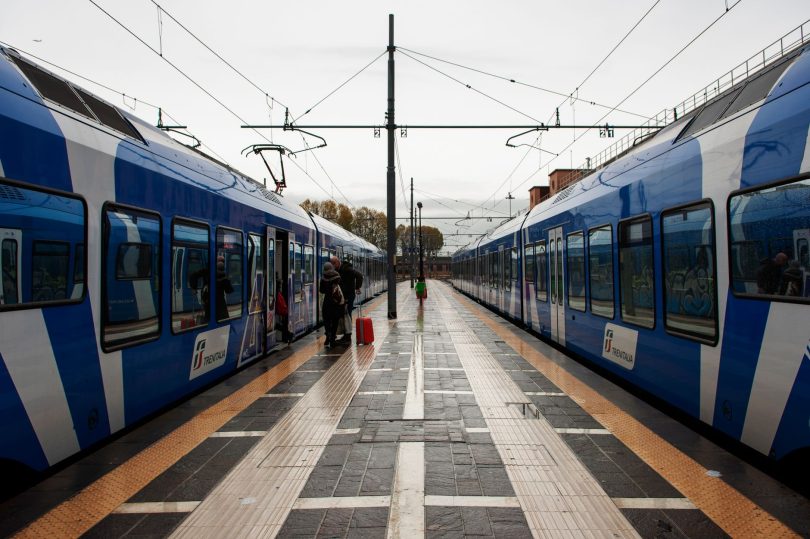

Rail travel across the north of England involves more than picking a departure time. Northern train ticket types each carry their own rules on booking windows, flexibility, and validity, and understanding them can make a real difference to how a journey is planned. Northern Trains Limited runs services to more than 500 destinations, and matching the right fare to a travel pattern starts with knowing what each ticket actually covers.
Understanding Northern’s Ticket Categories
Northern Trains Limited sells fares that fall broadly into three groups, advance, off-peak, and anytime, each structured so that a fixed commute and a flexible day trip both have an applicable option. Advance fares suit travellers with a fixed plan, off-peak fares suit those with some room to shift their departure, and anytime fares suit anyone who needs to travel without restriction. Knowing which category a ticket belongs to is the first step in working out what it allows.
Because the network reaches so many towns and cities, fare availability can vary from route to route. A ticket type offered on one line may not appear in the same form on another. That is why checking the specific journey, rather than assuming a blanket rule applies everywhere, matters when comparing Northern train ticket types before booking.
Advance Fares: Booking Ahead on Northern Routes
Advance fares are tied to a specific train and date, decided at the point of purchase. They tend to suit passengers who already know their travel plans and are comfortable committing to a particular departure. Booking ahead of the travel date is generally how these fares become available, and they are usually bought online rather than at the station on the day.
Northern Trains Limited includes advance-style savings as part of its wider ticketing options, and these fares can be purchased online without booking fees, which simplifies comparing them before a trip. Because these tickets are locked to a set service, changing plans after booking can mean restrictions apply. Passengers who value certainty over flexibility often find this category suits their needs.
Off-Peak Travel with Northern Tickets

Off-peak tickets are built around the time of day rather than a specific train, allowing travel outside the busiest commuting hours and typically avoiding the early morning and late afternoon peaks on weekdays. This makes them a common choice for leisure trips, visits to family, or any journey where the exact departure time is not fixed in advance. Unlike advance fares, off-peak tickets usually allow a choice of trains within the permitted time window.
That window gives a degree of flexibility that advance fares do not offer, though it comes with the restriction of not being valid during peak periods. For travel across the network without a rigid schedule, this fare type often strikes a practical balance between cost and convenience.
Anytime Fares and Peak-Time Flexibility
Anytime tickets remove time restrictions entirely. They can be used on any train on the day of travel, including during peak commuting hours, which makes them suited to journeys that cannot be shifted to quieter periods. Business travel, early meetings, or last-minute trips are typical examples of when this fare type gets used.
This flexibility is the trade-off against the lower cost of off-peak or advance options, since anytime fares exist specifically for situations where the time of travel is not negotiable. Among Northern train ticket types, this one is built purely around freedom of movement. Northern Trains Limited positions it as the option with no date or time window attached.
How Ticket Type Affects a Journey on Northern’s Network

The choice of ticket shapes more than just the price paid. It determines which trains can be boarded, whether a seat reservation is tied to one service, and how much notice is needed before travelling. On a network spanning over 500 destinations, this matters because journey patterns differ widely between short local hops and longer cross-region trips.
A passenger travelling between two nearby stations for a single afternoon has different needs from one connecting across several towns during a weekday morning. Northern Trains Limited lists fare options by route, so availability can differ even between stations served by the same line. Recognising these distinctions in advance avoids confusion at the ticket gate or on board.
- Advance fares are linked to one specific train and date, fixed at the time of booking.
- Off-peak fares allow travel across a range of trains but only outside peak commuting hours.
- Anytime fares permit travel on any train throughout the day, including peak periods.
- Advance tickets typically offer the least flexibility for changes once purchased.
- Off-peak and anytime tickets generally allow more choice over which specific train is taken.
- Availability of each ticket type can differ depending on the route and destination selected across the network.
Choosing the Right Northern Ticket for a Travel Pattern
Matching a ticket to a travel pattern comes down to how fixed the plans are. A set departure with no need to change suits an advance fare, while a flexible day with no fixed time suits an off-peak option. For travel during busy commuting windows, an anytime fare removes any restriction on timing.
Northern Trains Limited presents these choices online, where each fare’s conditions are listed next to the relevant route. Considering how firm the travel date and time really are helps clarify which of the Northern train ticket types fits best. Checking a specific route’s fare options directly is also worthwhile, since not every ticket type is guaranteed on every line.
Ultimately, the right fare is less about a label and more about matching its rules to the shape of the journey ahead.