

Flexible slate veneer looks simple to fit, which is exactly why so many installations go wrong. Mistakes with flexible slate veneer installation usually start with a misunderstanding of what the material actually is, rather than with poor workmanship. This article looks at where those misconceptions come from and how they can be avoided across common materials including translucent slate sheets, split face cladding, and marble mosaics.
What Flexible Slate Veneer Actually Is (And What It Isn’t)
Flexible slate veneer is not a printed panel or a plastic imitation of stone. Lite Stone describes its slate sheets as having a 100% natural stone face, manufactured with a fibre glass and resin backing, and its marble veneer sheets as a 100% natural marble face chemically extracted from a block of marble and finished with the same fibre glass and resin backing for flexibility. That backing is what allows a thin slice of real stone to bend around a corner or lie flat against a wall without cracking.
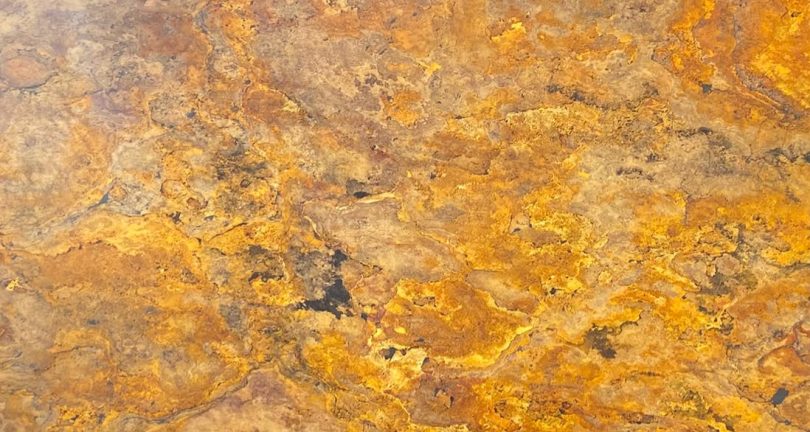
Because the stone face is genuine, each sheet carries natural variation in colour, shine, and texture. Ranges such as Nero, Silver Grey, Cobre, Terra Black, and Burning Forest each have their own finish, from mild riven textures to high-shine surfaces. Treating these sheets as uniform, factory-identical tiles is one of the first conceptual mistakes that leads to patchy-looking walls later on.
Lightweight Backing and Adhesive Preparation Requirements

A common assumption is that because a sheet is thin and light, the wall behind it needs little preparation. That assumption causes some of the most visible failures in flexible slate veneer installation, including sheets that lift at the edges or bulge once adhesive cures. The fibre glass and resin backing is designed for flexibility, not for compensating for an unprepared substrate.
Surfaces need to be clean, dry, and structurally sound before any sheet goes up, regardless of how light the material feels in hand. Lite Stone‘s self adhesive 60 x 30cm slate veneer sheets, which use a peel-and-stick backing for quicker fitting, are described as suitable for dry internal areas only. That distinction matters, because applying a product designed for dry interiors onto a damp or poorly sealed wall undermines the installation from the start.
Translucent Slate Veneer and Backlighting: Expectations vs. Reality
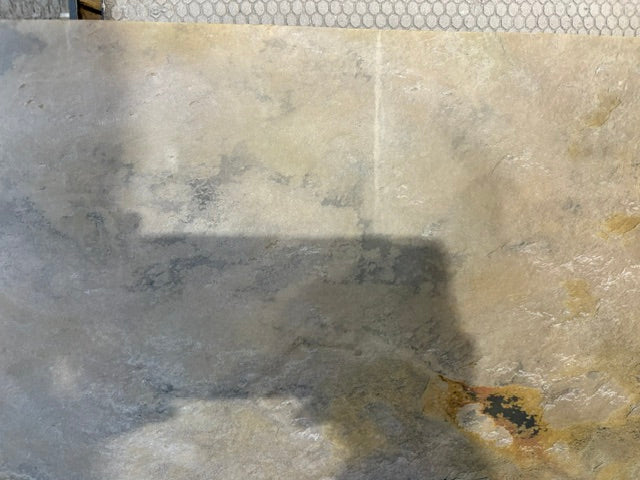
Translucent slate veneer sheets, such as the Rustique, Bianco, Falling Leaves, and Burning Forest translucent finishes, use a transparent resin backing instead of a standard opaque one. This is what allows light to pass through the stone face, which is why these sheets are positioned for backlit feature walls, bars, and counters. One frequent mistake is assuming any slate sheet can be backlit simply because it is thin.
Only the translucent range is built with that transparent backing, so a standard opaque slate sheet will not behave the same way under light. Expecting uniform glow across a large sheet can also lead to disappointment, since natural variation in the stone face affects how evenly light comes through. Ordering a sample before committing to a full backlit installation helps clarify how a particular finish actually transmits light.
Installation Mistakes with Split Face Cladding and Marble Mosaics
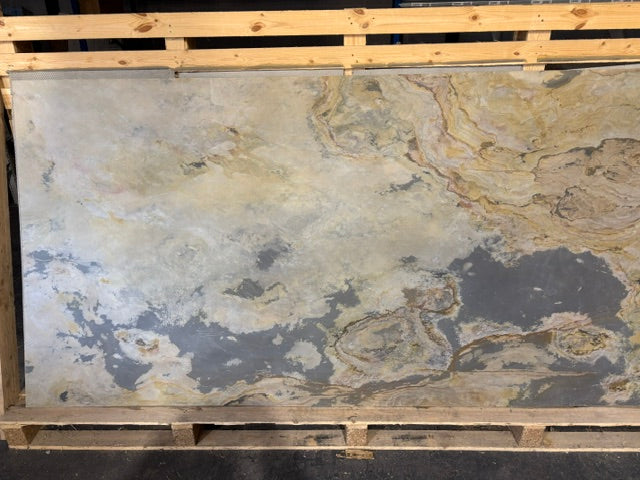
Split face cladding, such as the Rustic Travertine option supplied in 5 x 10cm pieces on a 30.5 x 30.5cm sheet, has a more three-dimensional, textured surface than flat slate veneer. Because the individual pieces sit at varying depths, alignment mistakes are more noticeable than on a flat sheet. Rushing the layout of split face sheets, without first dry-fitting a section, is a frequent cause of uneven joints.
Marble mosaics, including herringbone, hexagon, and basket weave patterns, bring a different challenge. Natural veining means no two sheets are identical, even within the same product line. Mixing mosaic sheets from different batches without checking veining and colour consistency can leave an otherwise careful installation looking disjointed.
How to Avoid Surface Damage with Slate Veneer Sheets
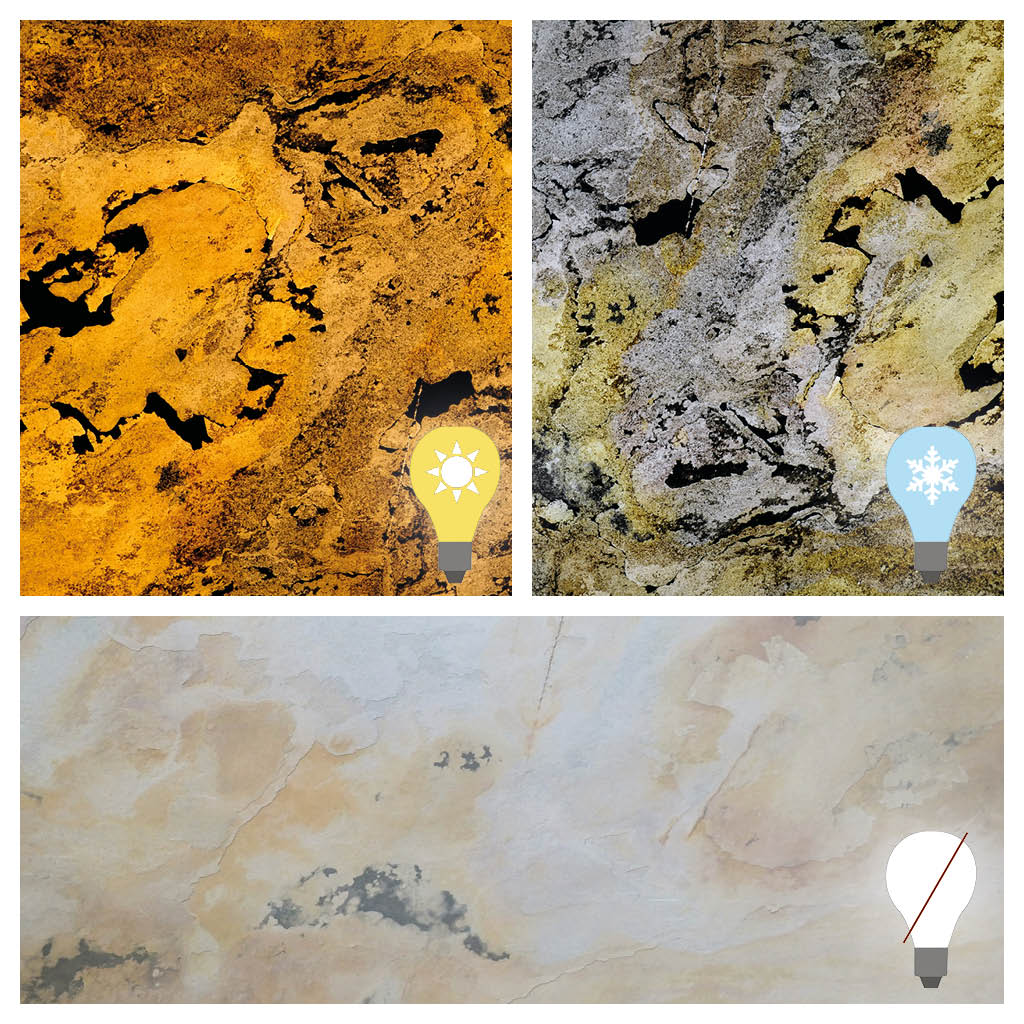
Because the stone face is thin, slate veneer sheets can be scored or chipped during cutting and handling if tools are not suited to the material. Flexible slate veneer installation often involves trimming sheets to fit around sockets, corners, or fixtures, and doing this with the wrong blade can crack the stone face even though the backing stays intact. Damage of this kind is sometimes mistaken for a manufacturing fault rather than a handling issue.
Lite Stone‘s own stock listings show how visible even minor surface damage can be. One large format translucent sheet, for example, was listed specifically because of two small splits along its long edges, each around 15cm, caused during handling. That kind of flaw illustrates why sheets need careful support during transport and cutting, not just during fixing to the wall.
Curing time is another area where surface damage occurs after installation rather than during it. Pressing or leaning objects against freshly fitted veneer before adhesive has fully set can shift sheets out of alignment. Allowing adhesive to cure fully, as directed for the specific adhesive product in use, protects the finish before any load is placed on the wall.
Testing Materials: Why Ordering Samples First Matters
Lite Stone makes samples available across its slate, translucent, split face, and marble mosaic ranges, selectable from the size options on each product page. This allows colour, texture, and in the case of translucent sheets, light transmission, to be checked against an actual wall and its lighting conditions. Skipping this step is one of the quieter mistakes in flexible slate veneer installation, since it only becomes obvious once a full sheet is already fixed in place.
Samples also make it possible to test how a specific finish, such as Cobre’s red and silver tones or California Gold’s warmer palette, reads under the lighting of a particular room. Lite Stone supplies homeowners, designers, and trade customers throughout the UK, with nationwide delivery for both samples and full orders. That distribution reach is part of why checking a sample before a bulk order remains a practical step rather than an optional extra.
- Fixing sheets to a wall without cleaning or levelling the surface first, which leads to visible lifting later.
- Assuming a standard slate sheet can be backlit in the same way as a translucent one.
- Cutting sheets with unsuitable tools, which chips or scores the natural stone face.
- Mixing mosaic or cladding pieces from different batches without checking colour and veining consistency.
- Loading or leaning objects against a freshly fitted wall before the adhesive has fully cured.
- Ordering a full project’s worth of material without testing a sample against the actual wall and lighting first.
Most failures in flexible slate veneer installation trace back to treating a lightweight material as a low-effort one. Careful preparation and an honest look at a sample beforehand tend to decide how the finished wall turns out.