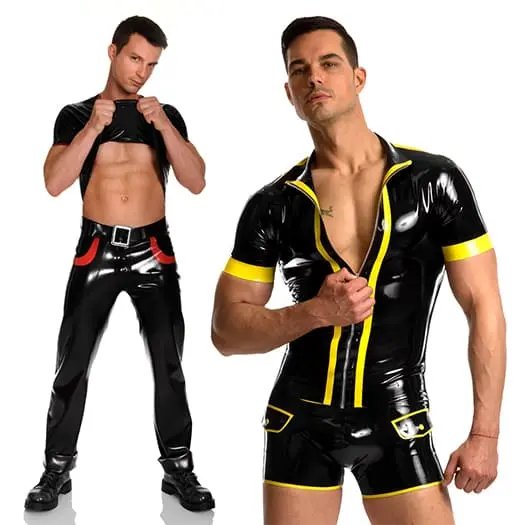

Latex catsuits and corsets occupy very different places in fetish fashion, even though both are staples of a well-stocked latex wardrobe. Anyone comparing latex catsuits and corsets quickly notices that one wraps the entire body in a single sculpted layer, while the other reshapes the torso through boning and lacing. Understanding how Libidex builds each piece, and why the construction differs so sharply, helps explain why experienced wearers often own several of both.
Sculpted Latex Catsuits: Construction and Body-Hugging Design
A latex catsuit is built as one continuous garment, usually with seams running along the limbs and torso to follow the body’s natural lines. Libidex produces these as made-to-order pieces, cut from glossy latex sheeting and assembled by hand in a London atelier. Because every panel is shaped to individual measurements, the finished suit sits close to the skin without excess material bunching at the joints.
The appeal of a catsuit lies in its continuity. There is no break between torso and limb, so the shine and tension of the latex reads as a single sculptural surface from neck to ankle. Libidex offers these designs across its full size range, from XXS through 6XL, which means the silhouette is not reserved for a narrow set of body types.
Structured Corsets: Engineered Support and Silhouette Control
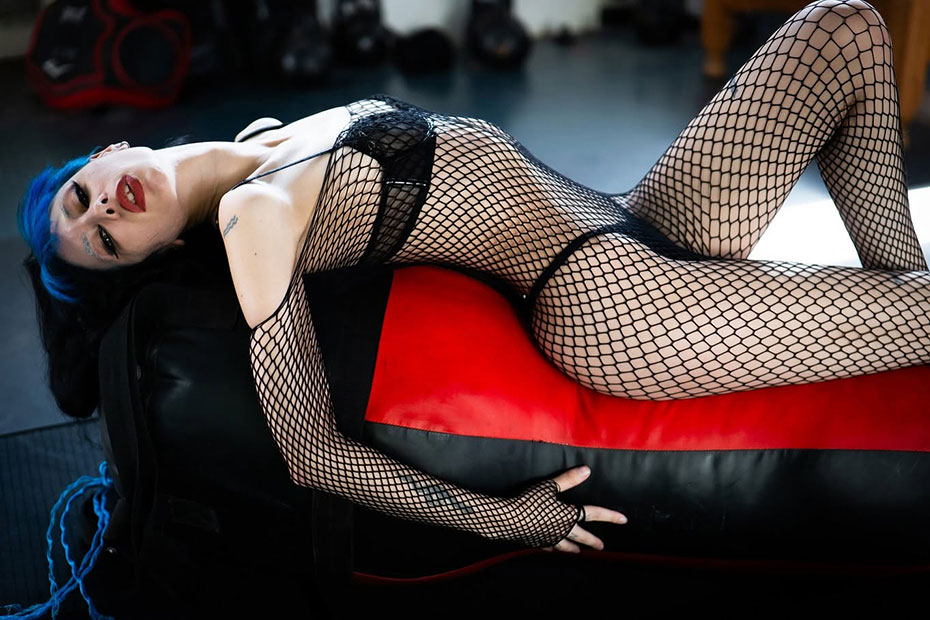
Where a catsuit covers, a corset constrains. Structured corsets rely on internal boning and external lacing to pull the waist in and hold the torso in a fixed shape, independent of the latex’s own stretch. The lacing also allows the fit to be adjusted at the point of wear, something a catsuit’s one-piece construction does not really permit.
Because corsets isolate the midsection, they pair readily with other latex pieces instead of standing in as a complete outfit, which makes the corset a more modular item than the catsuit. A corset asserts shape at the waist while leaving the arms, legs, and shoulders free for separate garments. That modularity is one reason corsets and catsuits so often appear together in the same look rather than as competing choices.
Catsuits Versus Corsets: Fit, Movement, and Layering Distinctions
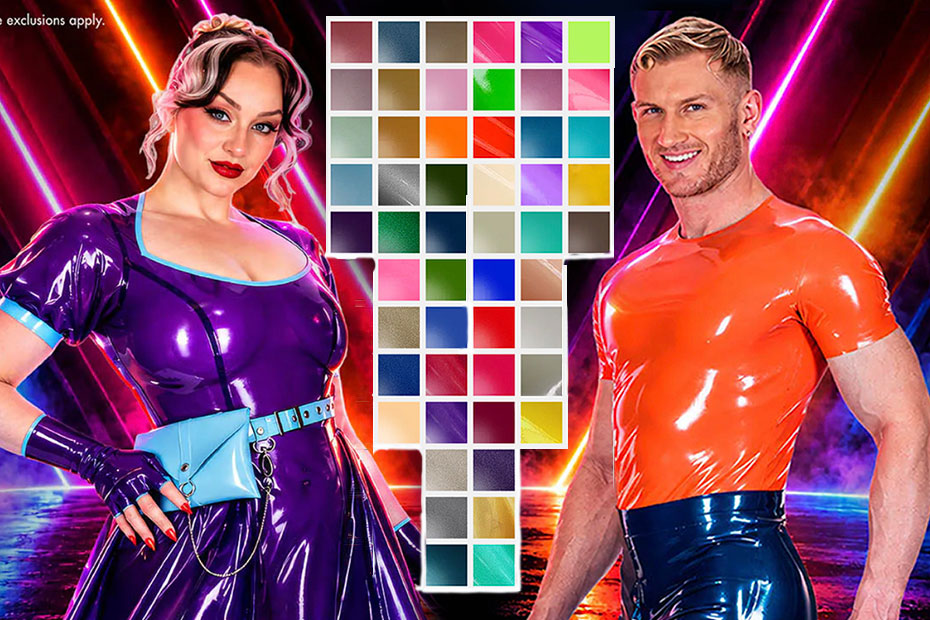
The practical differences between these two garment types become clearest once movement and layering enter the conversation. A catsuit asks the body to move as one shape, while a corset deliberately restricts movement in one specific zone, the torso, in exchange for silhouette control. Neither is better than the other; they simply solve different styling problems, and many latex catsuits and corsets end up styled together rather than apart.
- A latex catsuit generally takes longer to put on than a corset because its continuous construction means every limb must be eased into place before the garment settles correctly.
- A corset can be loosened or tightened at the lacing without removing the garment, while a catsuit’s fit is fixed once it is made.
- Catsuits restrict almost no single body zone specifically, offering fuller range of motion across the arms and legs, whereas corsets concentrate their restriction at the waist and ribs.
- Corsets layer easily over or under catsuits and other separates, while a catsuit typically functions as the outer layer of an outfit.
- Garments built for more intense scenarios, such as those in the Hard & Heavy range, demand more careful handling when donning than standard-weight catsuits or corsets.
The Hard & Heavy Range: When Intensity Demands Different Materials
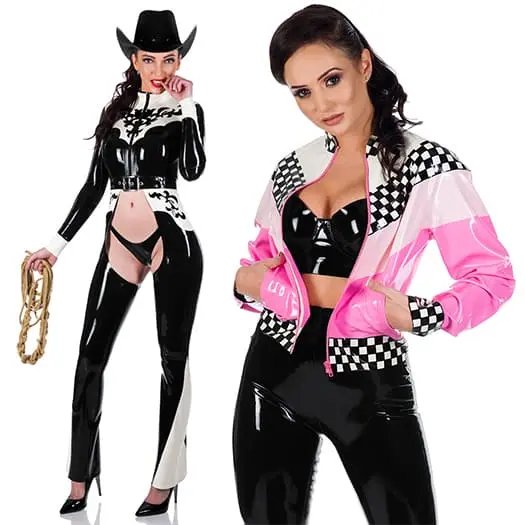
Beyond the standard catsuit and corset offerings, Libidex maintains a line called Hard & Heavy, aimed at wearers seeking a more serious or intense expression of latex fashion. This range sits apart from the everyday wardrobe pieces and is described as suited to serious players rather than casual styling. The name signals heavier latex and a more deliberate aesthetic rather than a lighter, everyday garment.
Because Hard & Heavy pieces are still made to order, the same bespoke sizing principles apply as with any other item in the catalogue. The distinction is one of intent and weight of material rather than a different production process. Anyone comparing latex catsuits and corsets across the standard and Hard & Heavy lines will notice the latter leans into a bolder, more exaggerated presentation.
Sizing Precision in Made-to-Order Latex Garments
Every garment, whether catsuit, corset, or Hard & Heavy piece, is produced to order rather than pulled from fixed stock sizing. Each is framed as a long-term wardrobe item rather than a disposable costume piece. The size range runs from XXS up to 6XL, covering a far wider span than most ready-to-wear fetish labels attempt, and the designs are offered for all genders.
For corsets specifically, waist and rib measurements interact with the boning and lacing allowance, so the finished shape depends on both the body’s dimensions and how much lacing adjustment is left in reserve. Catsuits depend more on limb length and torso height, since a poor fit there shows up as bagging or pulling rather than a loose waist. This is part of why latex catsuits and corsets are treated as separate design problems rather than variations on one template.
Maintenance Across Different Latex Garment Types
Latex garments of any type need careful handling, since the material is sensitive to oils, sharp edges, and prolonged light exposure. A catsuit’s larger surface area means more latex is exposed to friction during wear, while a corset’s boning channels and lacing eyelets introduce hardware that needs separate attention from the latex itself. Both garment types belong to the same broader latex wardrobe, so storage and cleaning habits overlap more than they differ.
That handmade, made-to-order approach has defined Libidex‘s production since the brand began crafting latex clothing from its London base. It is consistent with treating each piece as something to maintain rather than replace casually. Regular care of this kind follows naturally from how individually both garment types are constructed.
The Covent Garden boutique, often described as a central London fixture for latex shoppers, reflects the same long-standing emphasis on craftsmanship. As wardrobes grow, the choice rarely stays limited to one garment type. Many collections end up holding both a catsuit and a corset, each called on for a different kind of occasion.